Marca: Roberto Borghesi jewels & watches
Bulova Accutron - 18K gold Caliber 214H watch
Descripción
A piece of watchmaking history: the Bulova Accutron was the world’s first electronic watch, launched in 1960 and revolutionary for its tuning-fork technology, capable of guaranteeing accuracy to within one minute per month — an extraordinary achievement for the time, to the point of being adopted by NASA for the Explorer and Apollo space missions.
This example is equipped with the caliber 214H, a Swiss-made version with a hacking-seconds mechanism operated by a snap-in crown, housed in a solid 18K gold case (0.750 hallmark), with the case reference number stamped on the back. The silvered dial features applied hour markers and the “Bulova Accutron” signature, with the characteristic absence of a side winding crown, replaced by the rear lever-setting system typical of 214 models.
The Accutron movement (caliber 214/218) is one of the most fascinating inventions in the history of watchmaking: the first electronic watch to achieve worldwide commercial success, launched by Bulova in 1960. It works in a completely different way from a traditional mechanical movement or a modern quartz movement.
The principle: the vibrating tuning fork.
Instead of the classic oscillating balance wheel, which goes “tick-tock” back and forth, the Accutron uses a tuning fork made of a special alloy that vibrates at 360 Hz, or 360 times per second, a fixed frequency that is much more stable than traditional mechanical oscillations.
Detailed operation:
- Transistor circuit: a battery powers a small electronic circuit with a transistor that keeps the tuning fork vibrating constantly, a bit like a swing kept in motion with small regular pushes.
- Electromagnetic coils: two tiny coils, each containing about 90 meters of copper wire wound into an extremely small space, surround the prongs of the tuning fork; one detects the motion, the other powers it electrically to sustain it.
- Mechanical transmission of motion: this is where the genius of the design lies. A finger or lever attached to the tuning fork drives a wheel with 320 microscopic teeth, the index wheel, one tooth at a time with each vibration, by means of two tiny wedge-shaped synthetic jewels, the index jewel and the pawl jewel.
- This toothed wheel then transmits the motion to the hands through a conventional gear train, exactly as in a mechanical watch.
Why it is famous:
- Accuracy: about ±2 seconds per day, far better than the best mechanical watches of the time.
- The “hum”: unlike a tick-tock, the Accutron emits a characteristic continuous hum or buzz, which earned it the nickname “hummer.”
- No jerky seconds hand: the movement of the hands is practically continuous and smooth, without increments.
- It was used by NASA in several space missions for its extreme reliability.
Why voltage is so critical:
This is why the battery issue is important: the entire precision of the system depends on the exact vibration frequency of the tuning fork, determined by the circuit voltage. For example, with 1.55 V instead of 1.35 V, the tuning fork vibrates faster than intended and the watch runs fast, sometimes even by several minutes per day.
It is an extraordinary piece of transitional engineering: neither entirely mechanical nor quartz, but an elegant electromechanical hybrid that paved the way for electronics in watches.
También te puede gustar
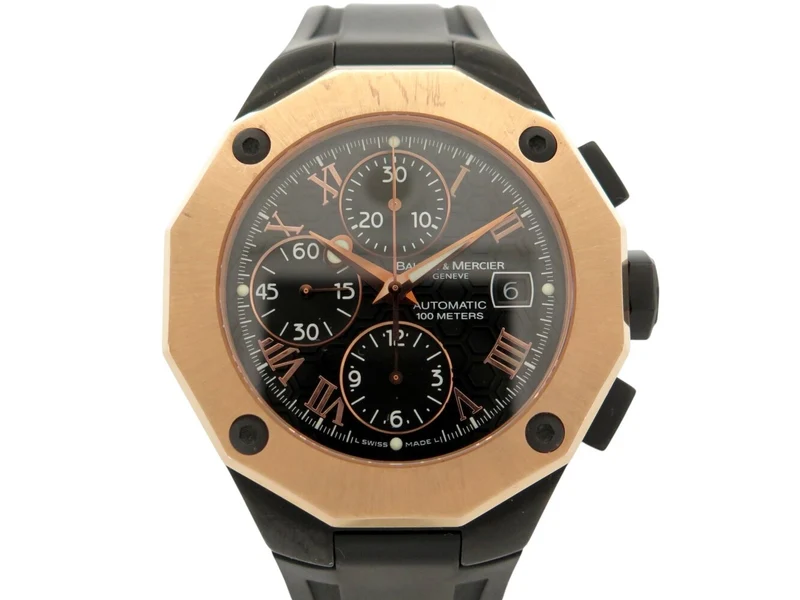 OfertaBaume et Mercier Riviera - Steel and rose gold chronograph watchCornerLuxe
3180,00 €1634,43 € OfertaChanel J12 - Steel watch, ceramic and black dialJNC&I
3400,00 €2229,39 €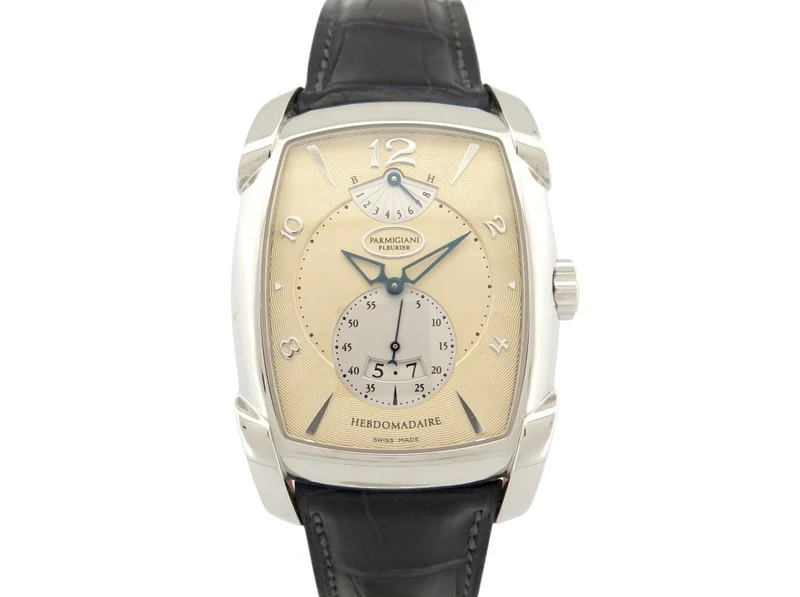 OfertaParmigiani Fleurier Kalpa XL Hebdomadaire - Palladium-plated steel watchCornerLuxe
6895,00 €4073,56 €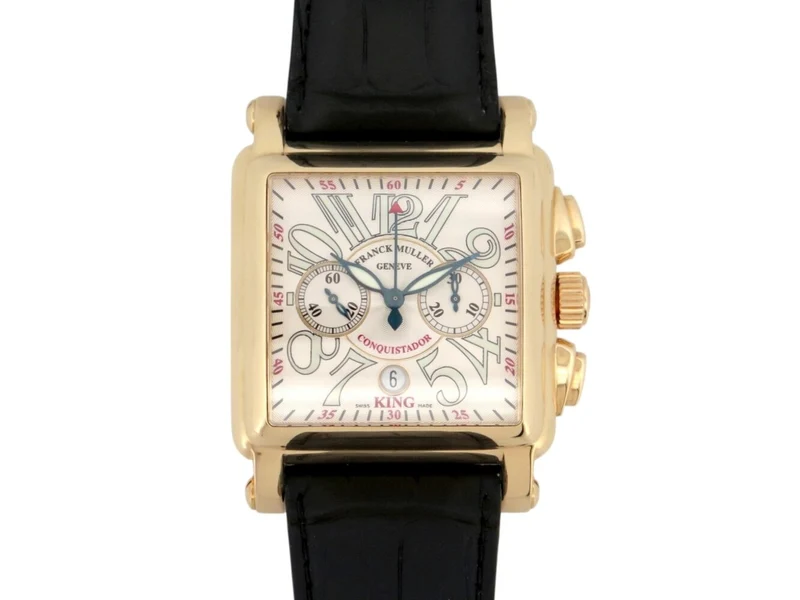 OfertaFranck Muller King Conquistador Cortez - 18k yellow gold watchCornerLuxe
20.035,00 €11.268,17 €